In an opinion piece published in The Chronicle Herald on June 20, 2026, President Bill Lahey makes the case for why King’s is essential to our past, present and future before he steps down after 10 years of leadership at the university. It is reproduced here.
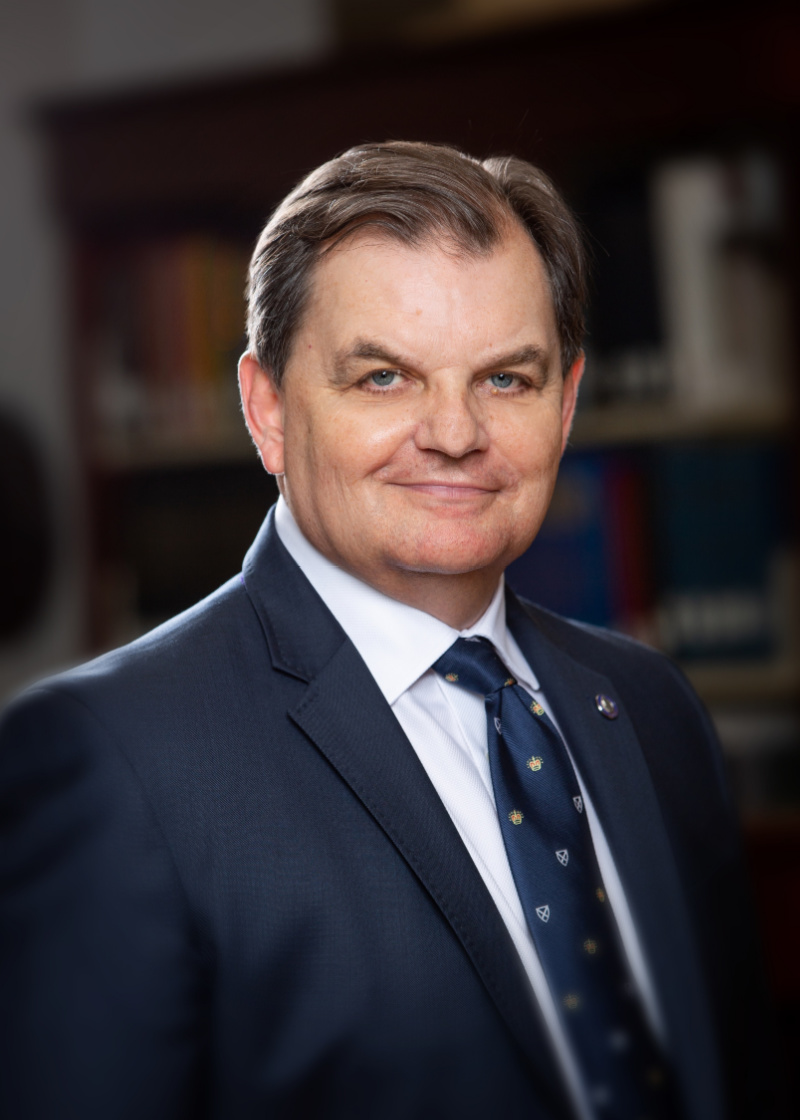 At the close of my term as president and vice‑chancellor of the University of King’s College, I find myself reflecting on how King’s and our graduates offer the unique skills required in a time marked by mistrust, fragmentation and rapid technological change.
When I became president a decade ago, I quickly felt this is where I belong.
A student once shared a Yoruba proverb with me: a river does not flow and forget its source. King’s did not displace my sources of formation, but it fortified my understanding of how institutions themselves can serve as sources of the continuity and purpose that lead to positive and sustainable change.
I believe in university education that serves the broad public purpose of forming citizens capable of analysis, judgment and purposeful action. A King’s education prepares people to weigh evidence alongside values and to listen, work and create with care. Ethical reasoning, creativity and civic responsibility are among education’s central aims and are necessary for a healthy democracy.
Universities, including King’s, operate under persistent constraints. However, we will not dilute the intensity of the educational experience that defines our institution. We continue to respond by doing the same things we ask of our students: think carefully and challenge ourselves to do better.
Productive relationships between universities and public partners must be grounded in careful articulation and understanding of how institutional purpose connects to shared public goals and outcomes. That work, if it is to be credible, requires universities to be explicit about their objectives, transparent about results and prepared to show how their teaching, research and community engagement contribute to broader public priorities. It also requires a responsiveness to the pressures governments and citizens face, while ensuring decisions are informed by a full understanding of the long‑term impacts universities are designed to deliver.
I am confident King’s will continue investing in education in the arts and journalism that connects to today’s realities through our focus on critical inquiry and the communication of complex ideas responsibly.
New programming in scripted storytelling and podcasting, built in partnership with the private sector, will support careers in Nova Scotia and beyond in these acclaimed and thriving industries. The support for these programs from private donors illustrates a belief in our approach and our enduring educational commitments.
By fortifying our long‑standing partnership with Dalhousie University, King’s will continue providing students access to a wider array of educational opportunities while preserving the culture and community that is paramount to our institution.
King’s is also moving ahead with the Southeast Corner Project, which will house best-in-Canada programs in journalism, writing and publishing, a new residence, and a new athletics and wellness centre for both the wider community and King’s.
In continuing collaboration with the Mi’kmaq and African Nova Scotian partners who have helped us design this building, it will uphold the vital work of storytelling and truth-sharing at a time when both are under pressure. It will draw students from across the country to refine their craft in service of a more informed and inclusive society.
King’s will continue to better understand and be accountable for its history and future responsibilities. Public trust depends on a willingness to engage difficult truths seriously and to act on what is learned. Critique can and should be an expression of sustained commitment to improvement, rather than one of rejection. The capacity to examine ourselves in this way is inseparable from our educational mission.
Leadership, at its best, is temporary stewardship. I step aside with confidence that King’s will continue to live its purpose. It will work constructively with private and public partners alike, affirming, quietly yet consistently, that education must prepare people for both the economy and the society we have and for the world we aspire to create.