“We are not our work, and that applies to mothering as much as it applies to how well an article or a book does, because we are so much more than our output.”
A decade after Stacey May Fowles, MFA’15, finished her Master of Fine Arts in Creative Nonfiction, she has emerged a more self-compassionate, even happier and healthier version of herself. The ambitious award-winning journalist, who for years wrote articles and novels late into the night after working a full-time job has, since becoming a mother, shifted her perspective.
“The meandering path, as I’ve learned over the past decade, is valuable,” says Fowles from her workspace where she sits crossed legged in comfy clothes. “You don’t have to destroy yourself to be successful, and that was a very hard lesson for me to learn because I destroyed myself to be successful for so long and I don’t want to do it anymore.”
Part of that transformation started during the King’s MFA program. Fowles, who had already published three novels, was mid-career and craving writing community as well as ways to submerge herself in the craft of long-form nonfiction.
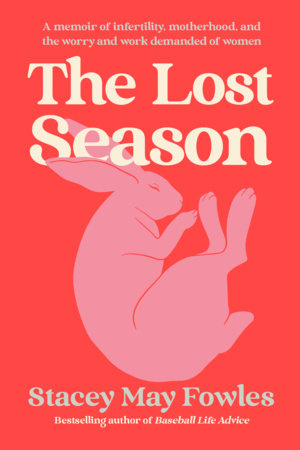 “My brain would just sing in those rooms where we were talking about structure and narrative and through lines,” says Fowles whose tenth book, The Lost Season: A Memoir of Infertility, Motherhood and the Worry and Work Demanded of Women, was released by Penguin Random House Canada in early June. Drafting a memoir can be a “very raw emotional experience,” she adds. The supportive environment of the MFA allowed her to experiment and learn how much of her personal life she was comfortable sharing publicly.
Even though Fowles didn’t publish the manuscript in its entirety that she worked on under the guidance of Lorri Neilsen Glenn and other MFA faculty, the time was not wasted. She gained not only community but “the tools and perspective” to be able to pursue freely what she really wanted to do. Shortly after graduating, Fowles shifted gears and wrote the national bestseller Baseball Life Advice: Loving the Game That Saved Me (Penguin Random House Canada 2017).
In The Lost Season, Fowles, who has edited four anthologies including Good Mom on Paper (Book*hug Press 2022), explores with great humility the enduring emotional and mental health ramifications of infertility, toxic hustle culture and the pressures put on mothers to do it all—without complaint. She grapples with questions many caregivers face, namely, how do we create new opportunities that feel more comfortable, that offer more room for us and our children (or the people we’re looking after), rather than trying to “shoehorn ourselves” into the frenzied productivity ethos of the current world. Eventually Fowles realized that she had to “disappear” from her old life and “uncouple her worth from her work.”
It wasn’t easy. She struggled to write creatively in the first two years of her child’s life. Even though others reassured her it was okay to take time to adjust, she had pushed herself for so long that who she was had become intrinsically linked to her productivity, and she berated herself for failing. However, around the time her daughter was two years old and the pandemic hit, something changed, and Fowles found she was suddenly drafting essays in a new, more lyrical voice. Over a five-year period, these pieces eventually became The Lost Season.
“It’s sort of wild to me, how much I wrote after such a long drought,” says Fowles, who now works, in the style of Maya Angelou or Edith Wharton, mainly sitting on her bed with her books and journals spread around her. Becoming a mother forced Fowles to adapt and shift her perspective not only on where she could work, but fundamentally, on her own value. “I had these very strict ideas about what gave a person worth, and it was work. It was paid, prestigious, high-profile work, and now I know that’s bullshit. It’s faulty logic.”
It could be said that writing The Lost Season on her bed, for Fowles, represents a physical manifestation of the massive change she has undergone and engineered for herself. She doesn’t engage in the frantic pitching and article writing that once consumed her. She’s striving to let go of the paradigms that governed her professional life and that includes rebuffing any societal-driven shame attached to writing on her bed.
For Fowles, who has long championed women’s writing and the less discussed but crucial aspects of women’s lives, The Lost Season is about changing direction. Fowles explores many topics related to mothering, including postpartum anxiety, but what clearly comes through is the notion that “we are not our work, and that applies to mothering as much as it applies to how well an article or a book does, because we are so much more than our output.”
These days, between school bake sales and talent show costumes, Fowles is drafting three manuscripts as well as book reviews. But it’s her editorial work with other writers that she finds far more exhilarating than any clicks or likes her articles received. In fact, it reminds her of “that electric feeling” she experienced during her MFA.
Good writing, according to Fowles, is not only about putting words on paper. It comes from reading widely, taking a vacation, going for a walk and connecting with other writers. It comes from following our passions, our obsessions and our curiosities, and working in the ways that best suit each of us, even if that means from a bed of one’s own.
This story was published in the latest edition of the MFA Scribbler, edited by Adelle Purdham, MFA’22.
The MFA Scribbler shares news about, from and for students, staff, alumni and friends of the University of King’s College Writing & Publishing Program. Read the June 2026 Newsletter.