Paddling, dog-sledding adventurer Patti-Kay Hamilton has joined the King’s MFA program to share the dark history of Canada’s national parks
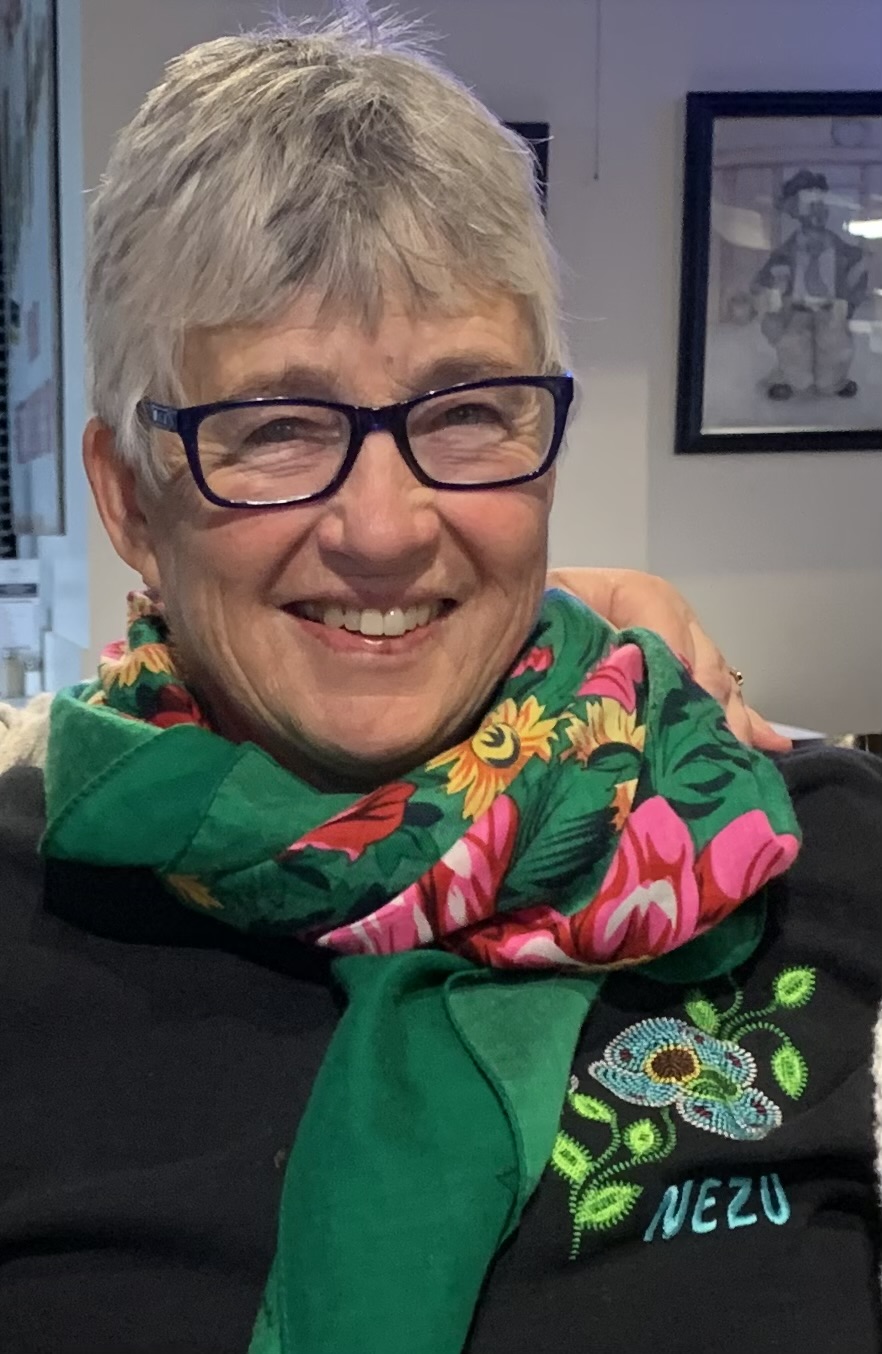 Patti-Kay Hamilton’s first university experience was at Guelph, where she bunked in a makeshift dorm with a group of young women and a remarkably resilient “superflea,” courtesy of the nearby veterinary college. Thanks to the infestation, she and her roommates were put up in hotels around Guelph every weekend. “And so, none of us studied. None of us. I don’t think we even picked up a book…”
Her second time at university was after she’d had her son, while she was living briefly in Calgary. “I thought, well, I’m not going to stay home and make cookies. I might as well do something. But I just wanted to go home back up north and go paddling, so I never did finish.”
Now, at 75, Hamilton is doing her MFA at King’s in Creative Nonfiction, from her home in Fort Smith in the Northwest Territories, supported by the Margaret Lynch MFA Award. She is one of four inaugural recipients of the award. There are two quotes guiding Hamilton in her studies. The first is from Margaret Lynch herself: “It’s never too late to go back to school.” The second is from Barbara Kingsolver, who she met at a writer’s retreat in Iceland: “Write the thing that’s rattling around in your heart.”
A winding road
After that first spell at university, life unfolded and unfurled, or, as Hamilton says, “one thing led to another.” A canoe trip to the Northwest Territories when she was 19 led to settling there. Heading into town for groceries with her dog team led to being drafted by the CBC to cover the Canadian Championship Dog Race from a helicopter. That led to a 30-year career as a broadcaster and writer.
Then, a few years ago, a story she’d written about her sister Annie, who had Down’s Syndrome, and then Alzheimer’s, was picked up by the CBC. Adelle Purdham, MFA’22, a King’s MFA grad who was working on a book about her own experiences with her daughter with Down’s Syndrome, reached out. Hamilton took a workshop with Purdham, and then an online writing retreat hosted by the Creative Nonfiction Collective, giving her confidence to tackle online learning.
Now, she’s preparing to finish the first year of her MFA, guided by mentor Sonja Boone and supported technically by a younger cohort. “Sometimes I’m really floundering and they can see the look in my face. The panic!”
Finding the story
Hamilton came to the program with an idea and bins and boxes full of archival material and audio tapes for her story, Stampeded, which is a creative nonfiction retelling of the 1990 plan by Agriculture Canada to slaughter all 5,000 buffalo in Wood Buffalo National Park in Northern Alberta. The announcement was met with outcry by Indigenous communities at public meetings, which Hamilton covered as bureau reporter. “They would tell stories: ‘When the park started in 1922, you charged my great-grandfather for killing one buffalo. You sent him to a federal penitentiary. You banished my family from our homeland forever, where all our relatives are buried.’” More investigating led Hamilton to discover the dark colonial history of Canada’s National Parks, and, decades later, it’s still the story that’s been rattling around her heart.
“My husband is Indigenous, and I live in an area that’s primarily Indigenous. All the people of a certain age from here went to residential school, so I followed the Truth and Reconciliation Commission hearings very closely. And one of the things they recommended is that Canadians need to know the truth about our history.”
Hamilton estimates that she started working on Stampeded when she was 50. “Now I’m 75, I better get it done this time.” Without King’s and the support of Margaret Lynch, though, she says, “I wouldn’t have even known where to start.”
Banner photo of Pine Lake, Wood Buffalo National Park by Ansgar Walk, CC BY-SA 2.5