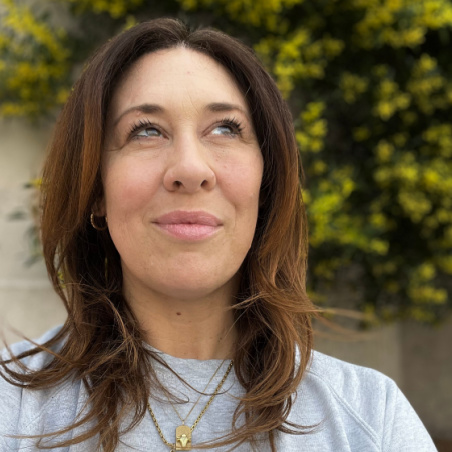
Amanda Burt Currie
Filmmaker, Producer, Writer
Bachelor of Arts (Hons), 1999, and Bachelor of Journalism, 2004
Winning the Peabody was super validating. This isn’t just an award for us, and the directors, but for everyone who contributed to the storytelling process, like the folks we interviewed who knew Jackie Shane…. To even have a story about a trans musician in that era, when so many people didn’t come out, that was important to me. These are stories that were never told.
When it comes to being a storyteller, Amanda Burt Currie, BA(Hons)’99, BJ’04, has an impressive resume. In Toronto, she cut her teeth—and lots of tape—as a producer for CBC and CBC News, ranging from The National with Peter Mansbridge to Q, to creating athlete features for the Olympics and the 2016 FIFA World Cup.
Most recently, Amanda produced a documentary on the untold biography of Jackie Shane, an expatriate American living in Canada, 1960s-era singer regarded as one of the first trans soul artists. Audiences lauded the film, as did the wider broadcast industry. In May 2025, Any Other Way: The Jackie Shane Story won the prestigious Peabody Award in the Documentary category.
Music has been central to many of Amanda’s key projects. In 2018, she joined Banger Films to lead their unscripted division and within two years one of her shows enjoyed impressive buzz: the eight-episode series This Is Pop that debuted on Netflix and tracks the history of pop music with segments on boy bands, the influence of Swedish groups like ABBA, the Autotune trend and much more.
Here, Amanda discusses what made the Jackie Shane project so fulfilling and shares how music even helped guide her to King’s.
What encouraged you to come to King’s when you were growing up in Toronto?
I was downtown on Yonge Street one day and was checking out vinyl and tapes at Sam the Record Man, and I spotted a poster on the wall. It was promoting Twice Removed, an album by Sloan. I thought they were the kind of people I wanted to be friends with. And since they’re from Halifax, King’s is in Halifax, I just went with it. [Patrick Pentland, BA’91, of Sloan is, in fact, a King’s alum, but Amanda didn’t know that at the time.]
I really loved my time at King’s. Of what stood out to me, I remember taking an elevator once with Journalism Professor Bruce Wark and he told me, “Don’t ever get comfortable, don’t ever trust anybody.” Today, when I look at what I’ve done with news and documentaries, I took his advice, and I never trust the first source on anything.
Being a news producer was a big part of your career. Can you tell us more about what the role entails?
I have to be honest, I had no idea what a producer did when I left journalism school. My first job at CBC was an associate producer, a tape AP, which meant I had to find all the footage for, say, the fire that blazed through downtown, or the mudslide that just happened in India. I had to do a lot of running around to get that B-roll.
Then I moved up the ranks, going from AP to writer to producer, and that meant being in charge of a story for the day. So, if there’s a fire, and it disrupted the transit system, or someone died, however the story unfolds I’d be responsible for getting it on air.
When I was producing for more documentary, or longer-form pieces, I was again ensuring the entire story was getting done, and I collaborated with a lot of people to make those stories work.
Was it validating to receive the Peabody Award?
Winning the Peabody was super validating and we freaked out when we found out we won. This isn’t just an award for us, and the directors, but for everyone who contributed to the storytelling process, like the folks we interviewed who knew Jackie.
Why do you believe the Jackie Shane story had to be told?
First, her music is so incredible, and her voice and musicianship is on the level of Otis Redding and Aretha Franklin.
Also, I think for many people, her real gender identity wasn’t known. She was advertised as male during her time in Toronto in the 1960s, but she knew she was a woman at 13. To even have a story about a trans musician in that era, when so many people didn’t come out, that was important to me. These are stories that were never told.
What was the process of making Any Other Way like?
At first, we knocked on a lot of doors, and it was hard to get interest and funding. But then we partnered with a producer at the National Film Board who was also hoping to make a doc about Jackie, so we joined forces. Bringing animation into the film was also central to a new vision we had. All in all, it took around seven years, it was all-consuming and there was a real seismic shift when we were putting the story together when we realized it’s not about us and our ideas about Jackie—it’s about Jackie and her ideas about herself, and what she wanted to see changed in the world.
By David Silverberg
Published February 2026