A $1.1 million donation will fund the next design phase for a new building on the southeast corner of King’s campus. The design, by Canadian architects Diamond Schmitt in association with Abbott Brown, envisions a place to foster future generations of journalists and creative writers and a campus that’s more reflective of and welcoming to all communities.
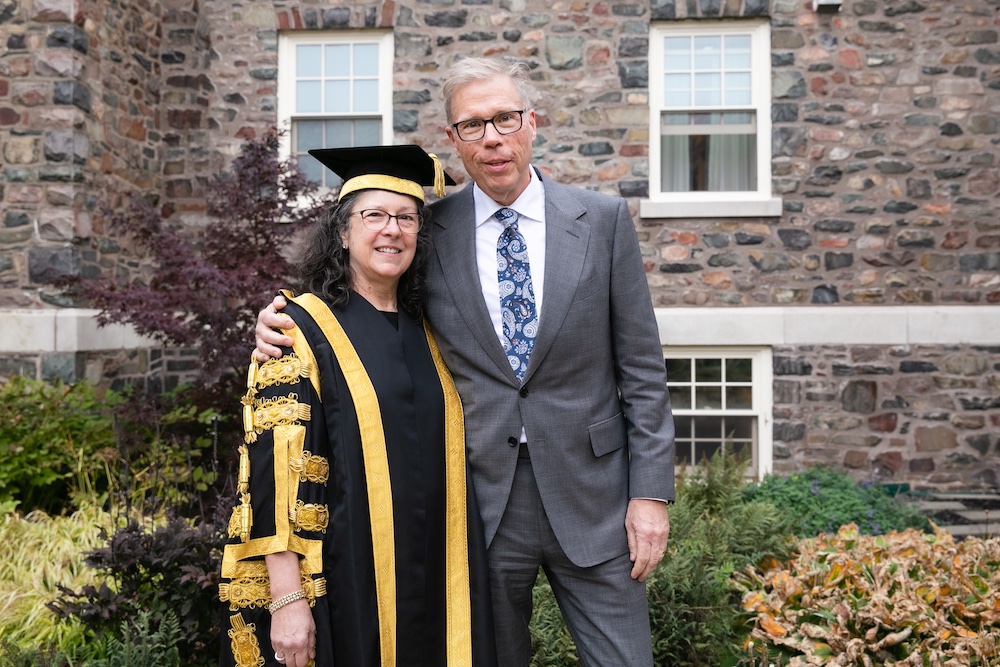 The University of King’s College is moving into the schematic design phase of its groundbreaking redevelopment plan for the southeast corner of King’s campus, thanks to a generous $1.1 million donation to the Welcoming: The Future King’s campaign from King’s Chancellor Debra Deane Little and her husband Robert Little through their Alpha Aquilae Foundation.
The SEC Project’s first phase was also funded by the Alpha Aquilae Foundation, culminating in the unveiling of concept designs for the SEC Project in November 2025. Diamond Schmitt’s concept designs detailed a plan for a welcoming, light-filled building with new facilities for the School of Journalism, Writing & Publishing, a reconceived Athletic Centre, residences and gathering places for students and the broader community. The project is crucial to maintaining and enhancing the national leadership of King’s in journalism and in writing and publishing education and to the contribution of King’s to an informed citizenry and democracy.
“King’s is extremely proud to launch the next phase of this bold, unique project that will invigorate our campus with state-of-the-art facilities and a stunning architectural design. The SEC Project will be a physical embodiment of King’s dedication to the next generations of students, and of the creative economy and inclusive media that are critical to democracy in Canada,” says President William Lahey. “We are profoundly grateful for the leadership and generosity shown by Chancellor Debra Deane Little and Bob Little, who not only share, but who are helping us realize our vision for the future of King’s.”
The Alpha Aquilae Foundation supports education, health, and community causes. This marks the sixth major gift from the foundation in seven years. It has been instrumental in many initiatives at King’s, including the restoration of three of King’s five historic student residences and, most recently, the launch of the Student Academic Support Program.
“Bob and I are thrilled to encourage the development of this stunning venue that will enrich the educational experience of King’s faculty, staff, students and athletes,” says Chancellor Debra Deane Little. “This next phase of the SEC Project will bring the university one huge step closer to realizing its vision for a revitalized campus, welcoming all who wish to be part of this exceptional community.”
SEC Phase 2: Schematic Design
This next step in the SEC design process involves generating schematics that closely examine the project’s physical constraints and enable the design team to evaluate potential construction materials, building systems, and project delivery approaches. The design team will continue working closely with the King’s community to confirm project requirements and test emerging design options.
“We are incredibly excited to continue our work on this transformational project for King’s, shaped by ongoing engagement with the King’s community and a respect for the legacy of the historic buildings on campus,” says Martin Davidson, Principal at Diamond Schmitt. “This phase will bring further refinement to the core principles of the design, a project that positions a light-filled, wood-framed galleria both as a connector to Dalhousie and a shared living room for the campus, informed by Indigenous and African Nova Scotian histories.”
The SEC Project will be designed not only to achieve LEED certification, but also to be a key step in the university’s commitment to creating a “Net-Zero Energy Campus,” with the goal of reaching net-zero GHGs for Scope 1 and Scope 2 emissions before 2030. The SEC design prioritizes sustainable construction materials and incorporates a geothermal project to heat and cool the entire King’s campus. The project is also pursuing Rick Hansen Gold Certification for accessibility.
Diamond Schmitt’s SEC design will incorporate locally sourced materials and sustainable and advanced construction methods to help build the Canadian construction economy. To ensure Canadian-made elements are practical and financially viable, the SEC design team is engaging local manufacturers and sub-trades early in the process, translating design intent into meaningful economic impact.
Procurement and contracts will prioritize Canadian vendors. All structural steel used in the building will be Canadian, and the curved glass galleria will be fabricated using capabilities available in Canada. This project aims to be among the first major Atlantic Canadian public buildings to showcase heavy-timber construction, supporting the growth of a local, emerging heavy-timber manufacturing and construction industry, while also prioritizing the involvement of Mi’kmaw craftspeople and artists in the design and construction of interior wood elements.
The project seeks to incorporate reused bluestone from the existing Gymnasium and other sources in Atlantic Canada. Commonly called “Dalhousie stone,” this material was used extensively in historic buildings at both Dalhousie and King’s. In addition to reinforcing a shared architectural heritage between the two institutions, the use of stone such as bluestone and granite acknowledges a deep African Nova Scotian connection to the province’s stone masonry tradition. The project will source local stone and seek to engage African Nova Scotian tradespeople in construction.
Partners from the Mi’kmaq and African Nova Scotian communities have played an integral role in informing institutional and design decisions, with key ideas for incorporating Indigeneity and African Nova Scotian history and culture within the physical spaces in the new building.
Phase two of the SEC Project began in March of this year and is scheduled to be complete in July 2026.