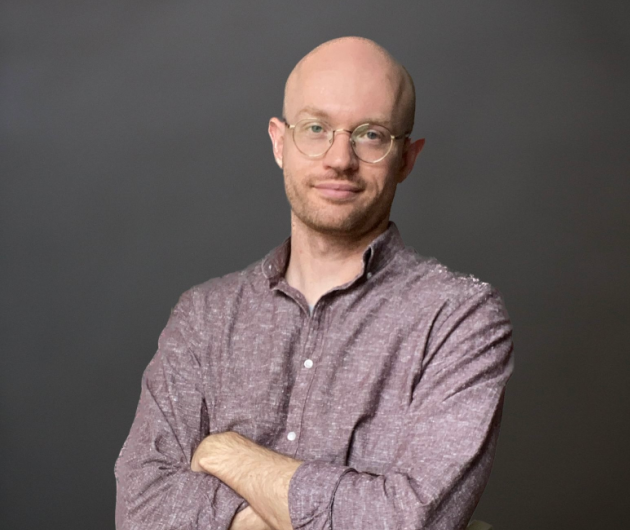
BA (Vind), MA (Western), PhD (McMaster)
Mike Bennett’s research explores the intersections between philosophy and evolutionary science, the relationships between truth, language and therapy in classical Athens and postwar Paris, and the use and abuse of the history of philosophy. He is the author of Deleuze and Ancient Greek Physics: The Image of Nature (Bloomsbury 2017) and co-editor of the interdisciplinary collection Deleuze and Evolutionary Theory (Edinburgh University Press 2019). His most recent monograph, The New Lucretians, Contemporary Materialism and Historical Method (Palgrave Macmillan 2026), critically examines the prestige of the Roman poet Lucretius among “new materialist” theorists, and he is currently starting a new project on the methodological writings of the early-twentieth-century French historian of philosophy Émile Bréhier.
Since coming to King’s, Dr. Bennett has lectured in FYP on Roman Stoicism and Epicureanism, Montaigne, Juvenal, Foucault, Heidegger and Carnap, and taught upper-year courses on Biopolitics, Darwin, Wittgenstein, Science Fiction, the Introduction to the History of Science, as well as the third-year core course in the Contemporary Studies Program, “Science and Culture.”
Recent Publications
- The New Lucretians, Contemporary Materialism and Historical Method, Palgrave Macmillan, 2026.
- “Barad’s Diffractive Methodology and the History of Philosophy,” Angelaki: A Journal of the Theoretical Humanities 30.6 (2025): 24–41.
- (Translation) Émile Bréhier, “Philosophy and its Past,” Philosophy Today 69.4 (Fall 2025): 777–93.
- “Lucretian ‘Moterialism’: Rereading De rerum natura with Barbara Cassin,” Journal of Continental Philosophy 6.1/2 (2025): 93–123.
- “Introduction: The Life of Ideas,” in Émile Bréhier, The Theory of Incorporeals in Ancient Stoicism, translated by Jared Bly and Ryan Johnson, Edinburgh University Press, 2025.
Interests
19th- and 20th-century European philosophy; poststructuralism and postmodernism; science studies and philosophy of science; gender, sex and sexuality; biopolitics and bioethics; history of philosophy (especially ancient Greek and Roman); language and logic